
Skip-Bo™: Solitaire Card Game
Mattel Game Studios HK LimitedCard
4.89.54K Reviews
- Version
- 1.13.1954
- Installs
- 10.00M
- Age Rating
- Everyone
Screenshots
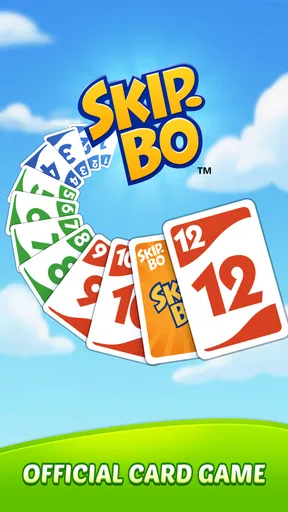
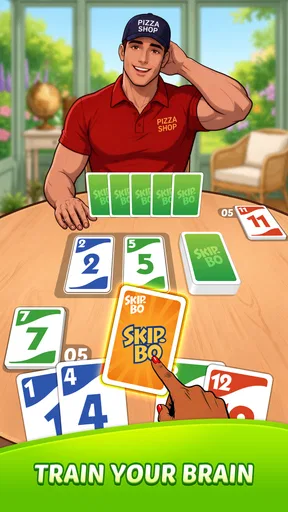
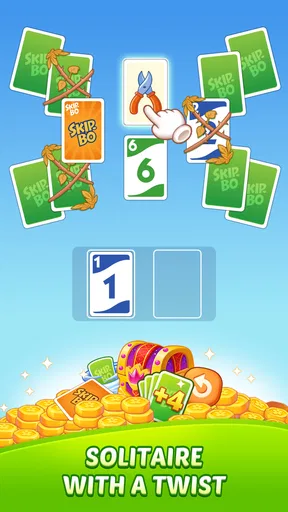


Our Review of Skip-Bo™: Solitaire Card Game
 Analysis by Appyee
I tend to judge a card game by what it asks of my attention: can I understand a turn quickly, does planning matter, and can I enjoy a short session without needing to treat it like a commitment? Skip-Bo™: Solitaire Card Game suits that kind of player. It takes the familiar pleasure of arranging cards and gives each move a little more purpose than simply clearing a hand.
That makes it a different choice from a traditional solitaire app, where the appeal is usually a quiet solo puzzle, and from a fast matching game that rewards quick reactions. Here, the central question is what to play now and what to hold back for a later turn. I find that modest bit of planning is what makes the game worth returning to.
What to consider before you download
If you already know Skip-Bo, the main attraction is having a digital way to play without laying out a physical deck or finding someone at the table. If the rules are new to you, the tutorial helps make the first session approachable. Either way, I’d choose it for a relaxed card game with decisions, not for a demanding strategy experience or a purely hands-off time filler.
The game is free to download, and its Everyone age rating makes it broadly suitable for casual play. It is made by Mattel163 Limited, has a 4.8 average from around 377,000 ratings, and has passed 10 million installs. Those figures suggest a substantial player base, but they don’t tell me whether its style will suit you: the useful test is whether you enjoy sequencing cards and thinking a turn ahead.
One practical point is that in-app purchases are available, ranging from $0.99 to $149.99 per item. I’d treat the free version as the place to decide whether the core play works for you, rather than assuming purchases are needed to enjoy a match. If you’re setting it up for a younger player, it is also sensible to review purchase settings on the device before handing it over.
Where the card play works best
The game’s strongest fit is a break that’s long enough for a few turns but not long enough to start a larger game. I can imagine opening it while waiting for a ride or relaxing after dinner: the stockpile goal gives a match direction, while the sequential stacks make each decision easy to read. You’re not simply tapping cards at random; you’re deciding which move helps now and which might keep a useful option available.
A small habit that helps is to pause before using a card just because it can be played. Look at the available sequence and consider whether a different card would open a better path through your stockpile. That moment of restraint is a useful distinction from many simple solitaire games, where the puzzle is often about finding any legal move. Here, the order of your choices can matter to your progress.
It can also work well when friends are not physically together. The published article describes solo play, friend challenges, and online matches with other players, so there are ways to approach it both as a personal diversion and as a social card game. I’d choose multiplayer when I want the uncertainty of another person’s decisions; for a quieter session, solo play is the more natural fit.
How it compares with other card games
Compared with classic solitaire, this is less about patiently solving a layout alone and more about working through a stockpile with sequential plays. Compared with quick, luck-led card games, it gives me more reason to think about the order of a turn. It sits in a comfortable middle ground: accessible enough to learn, but not so automatic that every move feels interchangeable.
That middle ground is also a limitation. If you want a deep competitive card game with a large set of rules to master, this may feel too light. If you want a completely solitary puzzle with no online element, you may prefer a conventional solitaire app. And if your favourite games depend on rapid action, the deliberate card sequencing here may feel slow rather than calming.
Getting Started
The moment you fire up Skip-Bo™: Solitaire Card Game, you're greeted with a sleek and inviting interface. It’s got this really vibrant and colorful vibe that immediately draws you in. The app is available for both Android and iOS, so no matter your device, you can join in on the fun. Setting it up is a breeze—you’ll be shuffling and stacking those cards in no time!
The game kicks off with a quick tutorial to get you acquainted with the basics. Even if you’ve never played Skip-Bo before, the app does a fantastic job of walking you through the rules. Trust me, by the end of it, you'll feel like a seasoned pro.
Gameplay Experience
Once you're past the tutorial, it’s time to dive into the action. The essence of the game is to be the first to play all the cards in your stockpile by creating sequential stacks. It’s surprisingly strategic, requiring a blend of luck and skill. You’ll find yourself constantly weighing your options, trying to outthink your virtual opponents.
The app offers several game modes to keep things interesting. Whether you want to play solo, challenge friends, or go head-to-head against random players online, there's something for everyone. One of my favorite parts is the multiplayer feature—it adds a whole new level of excitement when you’re outsmarting real people.
Visuals and Sound
Now, let’s talk about the aesthetics. The graphics are crisp and clean, making everything easy to see and interact with. The card animations are smooth, and the sound effects are subtle yet satisfying—perfect for when you’re in the zone. The background music is also a nice touch, adding to the overall chill vibe of the game.
If you’re the kind of person who loves customizing your gaming experience, you’ll appreciate the various themes and card designs available. It’s little touches like these that make the game feel personal and engaging.
Features Worth Highlighting
One of the standout features of Skip-Bo™: Solitaire Card Game is its daily challenges. These challenges offer a fun way to test your skills and earn rewards. Plus, they keep the game feeling fresh and give you a reason to come back every day.
Another nifty feature is the in-game chat during multiplayer matches. I love being able to exchange friendly banter (or competitive trash talk) with opponents. It adds a social element that keeps things lively.
The game also doesn’t skimp on accessibility. It’s designed to be intuitive and easy to navigate, with plenty of settings to adjust the difficulty level. Whether you’re a casual player or a hardcore strategist, you can tailor the game to suit your style.
Cost and commitment
The free entry point makes it easy to try a few matches before deciding whether this style of play deserves a place on your phone. The current version is 1.12.1710, and the minimum Android requirement is 5.0. I’d check that requirement against an older device before downloading, especially if it is one you keep around for casual games.
There is a difference between trying the game and making it part of a routine. Daily challenges can provide a reason to return, but they may also make a relaxed pastime feel like something to keep up with. I’d use them when the prompt sounds fun and ignore them when I only have time for a quick match; the game is more enjoyable when the routine serves you rather than the other way around.
Switching from a physical deck is convenient, but it changes the social feel. A screen handles the dealing and card movement, so there is less table setup and fewer little pauses between turns. On the other hand, if what you enjoy most is chatting face to face and handling cards together, the app cannot replace that part of the experience. I’d keep the physical version for a shared evening and use the app for solo downtime or remote play.
Small choices that improve a session
For a first match, I’d focus on learning how the stockpile goal shapes your decisions rather than trying to optimize every move. Once the sequence becomes familiar, pay attention to which cards you are spending and whether a play is helping you make progress or merely clearing something from view. This makes the game’s strategic element easier to feel without turning each turn into homework.
When playing against people, I’d also avoid treating every match as a test of skill. Card games include uncertainty, and a sensible plan will not guarantee a win. The better reason to choose multiplayer is that another person makes the pace and choices less predictable. If losing to chance would sour a short break, a solo session may be a more comfortable option.
The visual clarity matters more than decoration in a card game, because you need to spot the order of cards at a glance. The bright presentation and clean card layout help with that. Themes and card designs add a personal touch, but I see them as extras rather than reasons to download; the core question is whether the cards remain easy for you to follow during a longer session.
Who should choose it
I’d recommend it to people who know the physical game and want a ready-to-play version, as well as newcomers who like learning a simple rule set and then making small tactical decisions. It is also a reasonable pick for someone who alternates between solo play and online opponents, rather than wanting every session to feel exactly the same.
I’d steer away if you want a deep deck-building experience, a complex tournament-style challenge, or a game that never asks you to think about sequencing. It may also be a poor fit if you dislike in-game purchases appearing in free games, even though you can first try the basic experience without paying. The stated purchase range is broad, so I would not make a purchase casually; decide what, if anything, adds value to your own play before spending.
For families, the Everyone rating is reassuring as a broad content classification, but it does not replace ordinary supervision around online interaction or spending. I’d show a child how the game works, explain that purchases cost money, and agree on device rules first. For an adult looking for a low-pressure shared activity, friend challenges may be more appealing than playing against unfamiliar opponents.
Final Thoughts
In a world filled with countless card games, Skip-Bo™: Solitaire Card Game manages to stand out with its engaging gameplay, vibrant visuals, and versatile features. It’s not just about luck; it’s about making smart choices and staying one step ahead of your opponents. Whether you’re looking to kill time or compete with friends, this app has got you covered.
So, if you haven’t already, give it a download and shuffle your way into some fun. Happy stacking!
My recommendation
My recommendation is simple: try it if the appeal of clearing a stockpile through ordered plays sounds satisfying, especially if you want both solo sessions and the option to face other people. The tutorial lowers the barrier to entry, and the bright cards make the basic flow easy to follow. I would not choose it as a substitute for every kind of card game, but as a focused, approachable take on Skip-Bo, it has a clear reason to exist.
Mattel163 Limited’s card game first released on October 23, 2021. Its strong 4.8 average across around 377,000 ratings is encouraging context, not a promise that every match will suit every player. I’d make the decision based on the pacing and the stockpile objective: if those sound enjoyable, the free download is an easy way to see whether the game fits your breaks.
Verdict
Strengths of Skip-Bo™: Solitaire Card Game
- Easy to learn for new players.
- Smooth and intuitive user interface.
- Engaging multiplayer mode available.
- Regular updates with new features.
- Offline mode for solo play.
Limitations of Skip-Bo™: Solitaire Card Game
- Occasional in-app purchase prompts.
- Ads can be frequent and intrusive.
- Limited customization options.
- Requires internet for multiplayer.
- Battery drain on extended play.
Other Releases by Mattel Game Studios HK Limited
View All
UNO Wonder
Card4.4

Phase 10: Casual Card Game
Card4.7
Similar Picks in This Category
View All
Solitaire - Classic Card Games
MobilityWare4.6

UNO!™
Mattel163 Limited4.3

Spider Solitaire: Card Games
MobilityWare4.6

Solitaire.com - Classic Cards
Tripledot Studios Limited4.7

Plants vs. Zombies™ Heroes
ELECTRONIC ARTS4.1

Hearthstone
Blizzard Entertainment, Inc.4.1
Frequently Asked Questions
What is the objective of Skip-Bo™: Solitaire Card Game?
Skip-Bo™: Solitaire Card Game is a strategic card game where the primary goal is to be the first player to use all the cards in your stockpile. Players draw from a central deck and play cards in sequential order onto building piles. Strategic thinking is crucial to manage your hand and outplay opponents.
Can I play Skip-Bo™ offline, or do I need an internet connection?
Skip-Bo™ offers both online and offline modes. You can enjoy the game offline by playing against AI opponents, which is great for practice or casual play. However, to play against real players online or participate in multiplayer modes, an internet connection is required.
Is Skip-Bo™ suitable for all ages?
Skip-Bo™ is designed to be family-friendly and suitable for players of all ages. Its simple rules make it accessible to younger players, while the strategic depth can engage adults. It’s a perfect choice for family game nights or casual play with friends.
Are there any in-app purchases in Skip-Bo™?
Yes, Skip-Bo™ includes in-app purchases. Players can buy various items such as power-ups, extra coins, or game themes to enhance their gaming experience. While these purchases can offer advantages, they are optional, and the game can be enjoyed fully without spending money.
How does Skip-Bo™ handle player progress and achievements?
Skip-Bo™ tracks player progress through levels and achievements. Players can earn rewards and unlock new features as they advance. The game often includes challenges and daily tasks to encourage continuous play and keep the experience exciting and rewarding.
Play our best games!


